For the one who keeps things running
Caregiver Planner for an Aging Parent
When you are looking after Mom or Dad, the details live in your head, on sticky notes and in a dozen text threads. Here is what is worth writing down, how families usually organize it, and a Notion planner that does it for you if you would rather not build one yourself.

What to keep track of
You don’t need all of this on day one. Start at the top; the first three cover most emergencies.
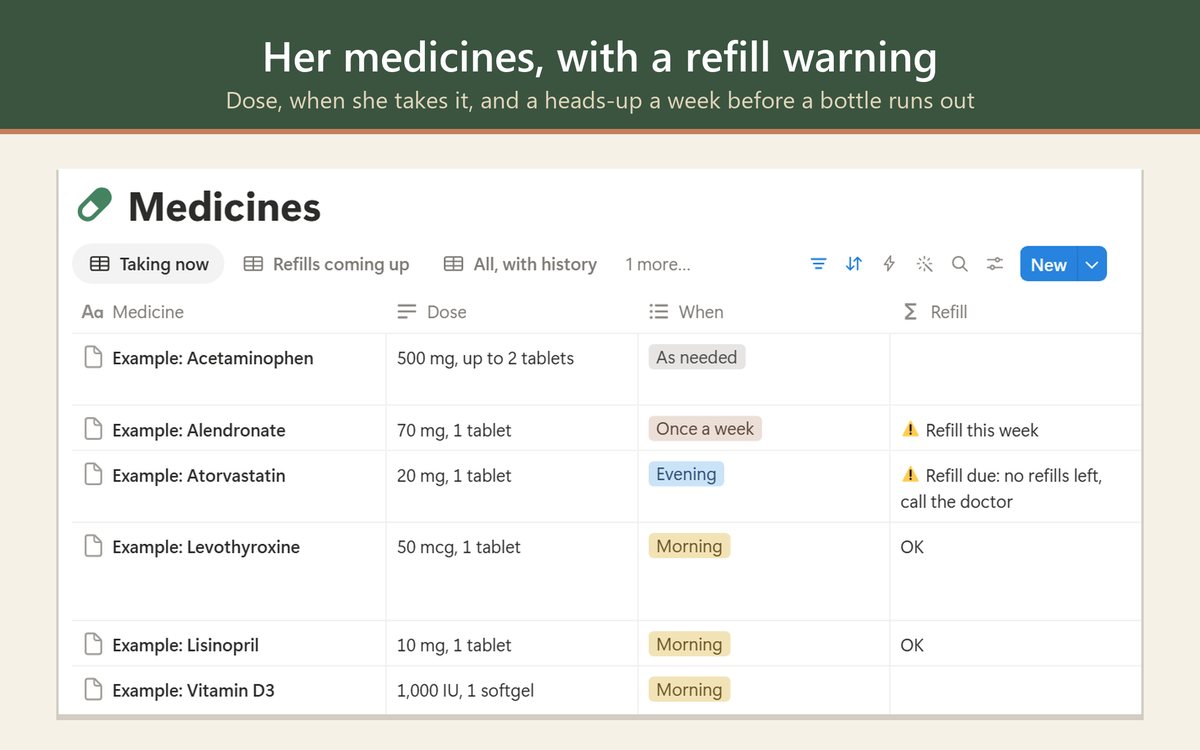
- Her medicines, in one current listName, dose, when she takes it, what it is for in her doctor's words, who prescribed it, the pharmacy and the Rx number. Add the last fill date and refills left so nobody is surprised by an empty bottle. The easiest way to start: ask her pharmacy for a printout of everything filled there, then add anything from other pharmacies and over-the-counter bottles in the cupboard. Keep stopped medicines on the list, marked stopped.
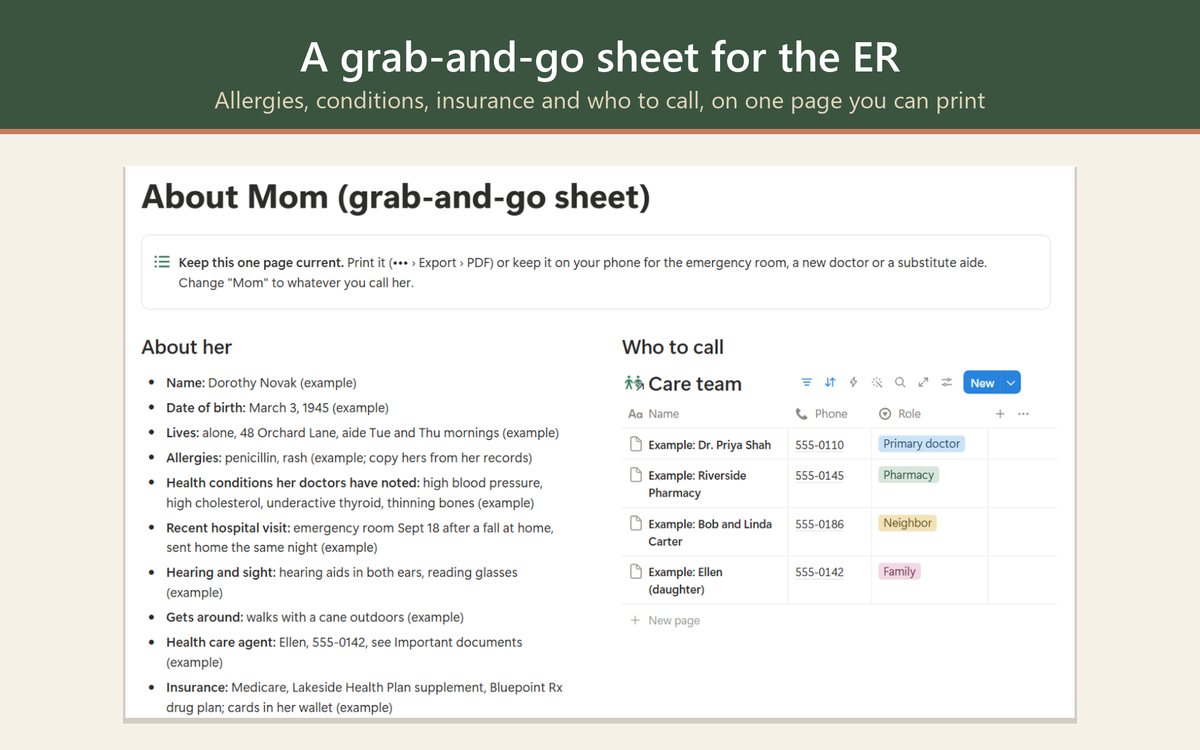
- Allergies and the health conditions her doctors have notedCopy them from her records or an after-visit summary, not from memory. This is the first thing an emergency room or a new doctor asks for.
- Who to callEach doctor, the pharmacy, any aide or agency, the insurance plans, her attorney, and the neighbor who has a key. Note the best way to reach each one and the hours.
- Insurance detailsMedicare or Medicaid, any supplement or Advantage plan and the drug plan, with member numbers and where the cards are kept.
- Appointments, with questions before and notes afterWho is driving, what to ask (written down before you go), what the doctor said and anything that changed. A week later, these notes settle the "did she say twice a day or once?" question.
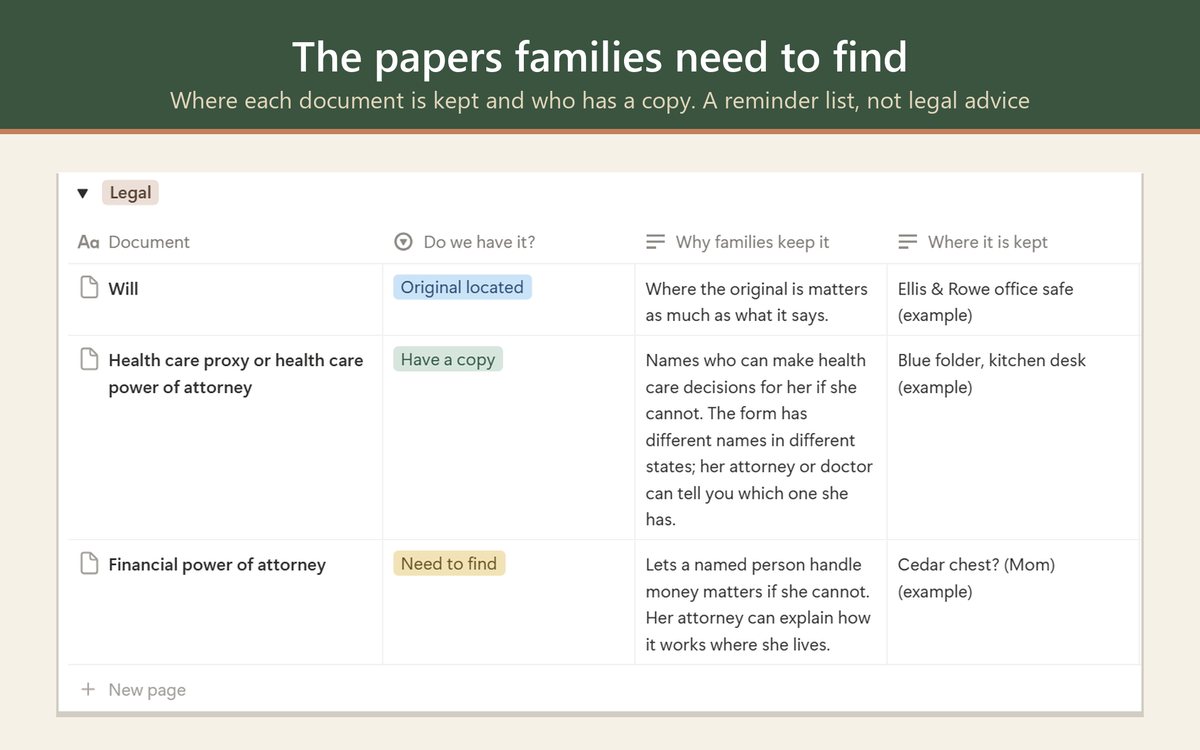
- Where the important papers arePower of attorney, health care proxy, advance directive, will, deed, insurance policies. You don't need copies of everything in one place, just where each original is and who has a copy. The names and rules for these papers differ by state; an elder law attorney can tell you which ones apply.
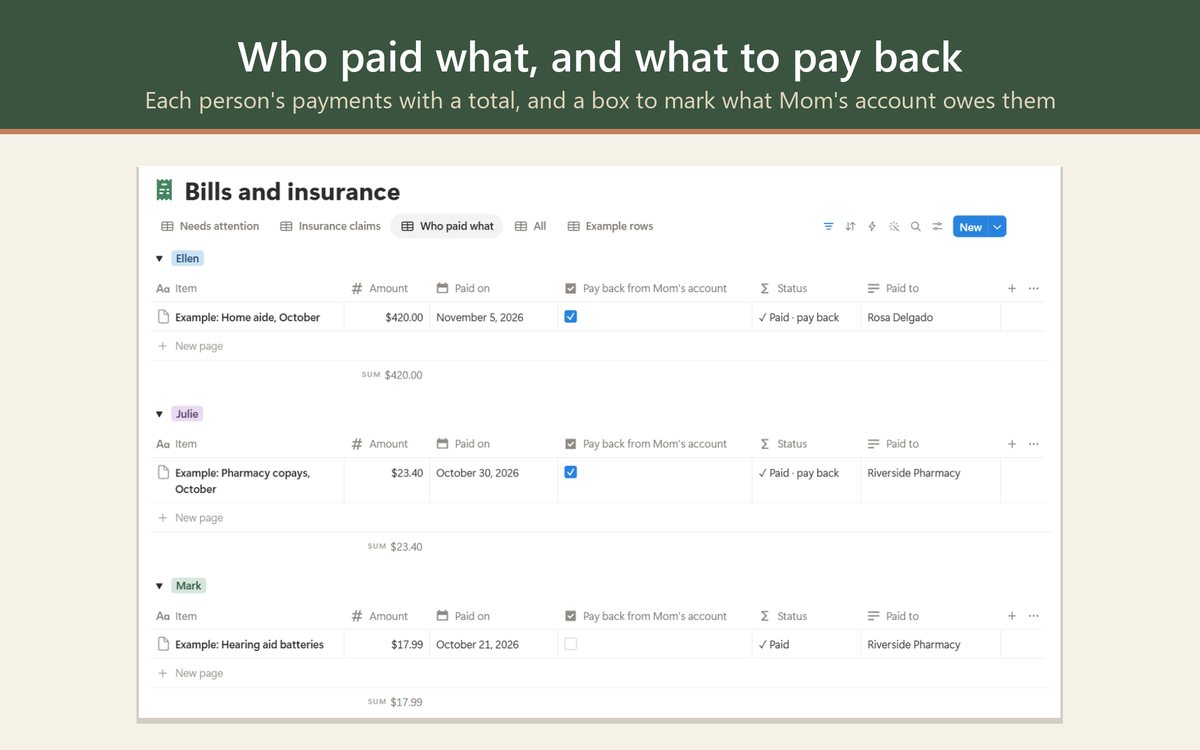
- Bills, and who paid whatDue dates, which ones are on autopay, claims waiting on insurance, and, if brothers and sisters share costs, a running list of who paid for what. That list prevents more arguments than anything else on this page.
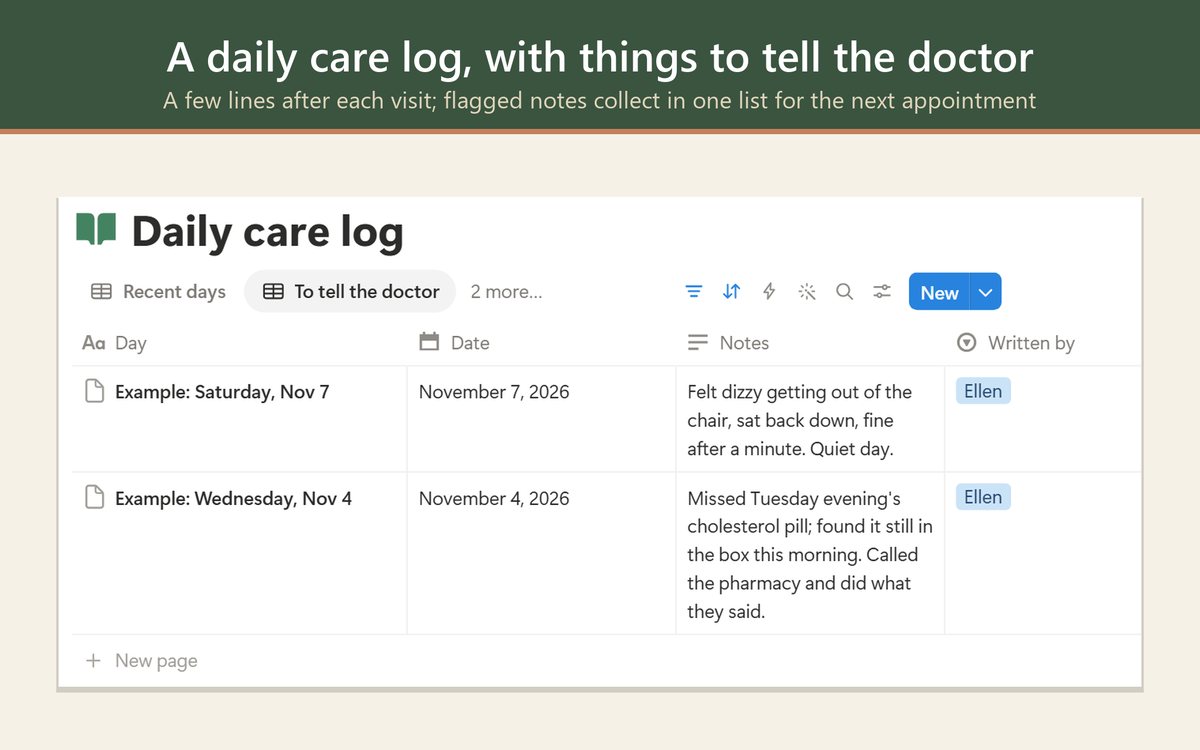
- A few lines after each visitHow she seemed, eating, sleep, whether the medicines were taken, and a flag for anything worth telling the doctor. Small changes are easy to miss day to day and easy to see over a month.
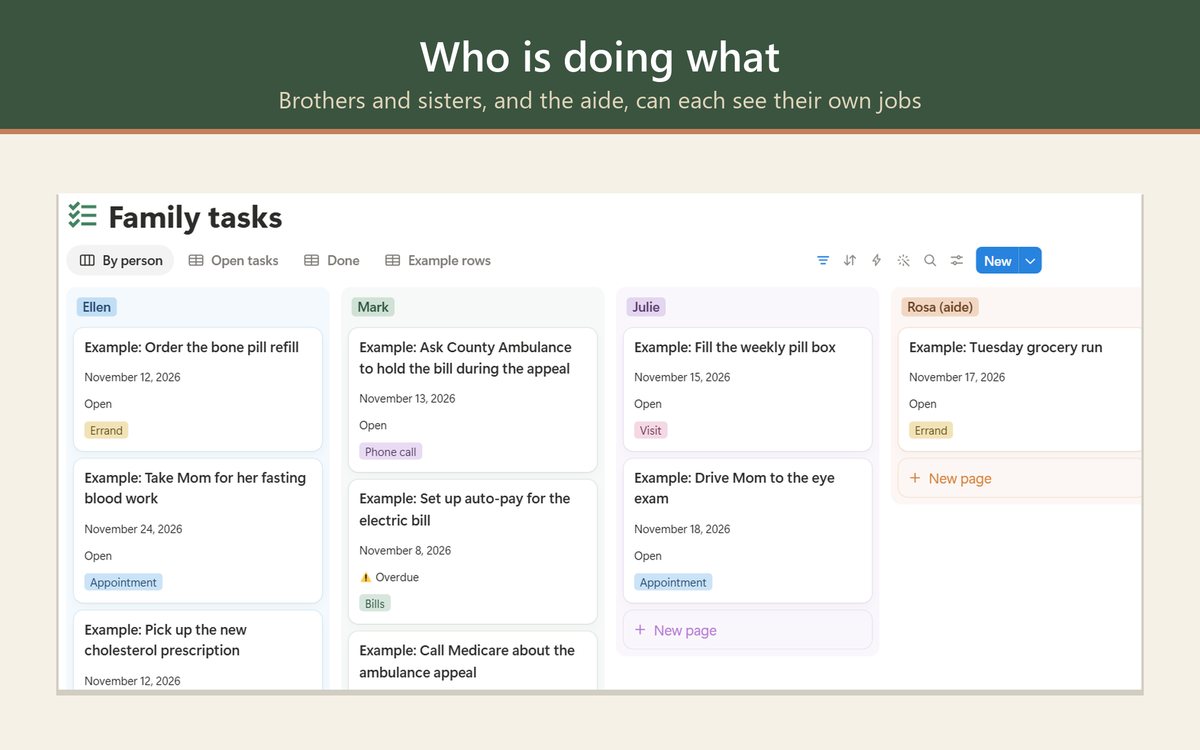
- Who is doing whatGroceries, the Tuesday pill box, the insurance call, the ride to the cardiologist. Written down, with a name next to each job, so it isn't all in one person's head.
Free: a 16-page large print puzzle pack
Two word searches, a crossword, a cryptogram, an easy sudoku, a short cozy mystery with a logic puzzle, and ten “Do you remember 1976?” trivia questions, all in true large print with every answer in the back. Print as many copies as you like for yourself, your family or your group.
How to organize care for an elderly parent
- Start with one page. Before anything else, make a single sheet with her allergies, conditions, current medicines, insurance and who to call. Print one for the fridge and keep one on your phone. If you do nothing else this week, do this.
- Pick one place everyone looks. A shared notebook, a binder by the phone, a shared document or an app. The tool matters less than everyone agreeing that this is where things are written down, instead of a dozen text threads.
- Split the jobs by person. Long-distance siblings can take the phone and paperwork jobs (insurance calls, bills, refills by mail); whoever lives closest takes rides and visits. Say it out loud and write it down.
- Set a 15-minute weekly check. Same day each week: refills due, bills due, appointments coming up, anything flagged in the notes. Fifteen minutes on Sunday saves a lot of Thursday-night scrambling.
- Keep official papers where they are. Track where each one is and who has a copy. Don't move originals around, and don't type passwords or full account numbers into anything shared.
This page is about getting organized. It is not medical, legal or financial advice. Follow her doctors’ and pharmacist’s instructions, and in an emergency call 911.
Notion template · works on the free plan
Looking After Mom & Dad
Everything on the list above, already set up in Notion and shared with the family on their phones. It also does some of the remembering: a refill warning a week before a bottle runs out, a running total of who paid what, and a one-page grab-and-go sheet to print for the emergency room.
- Medicines, appointments and visit notes, the care team, bills and insurance claims
- A daily care log, a family task board with a column for each person, and an important-documents list
- Filled with clearly labeled example data for a made-up family, with an Example rows view to clear it
- A one-time purchase: you duplicate it into your own Notion account and it is yours to keep
Get it on Gumroad, $19 Or on Etsy, $16.99 Get it on the Notion Marketplace
After checkout you get a link: open it, click Duplicate, and choose your Notion workspace. A free Notion account is all you need.

Inside the planner
Real screenshots of the template with its made-up example family.
Get it on Gumroad, $19 Or on Etsy, $16.99 Get it on the Notion Marketplace
Questions & answers
What should a caregiver keep track of for an aging parent?
The essentials are a current medicine list, allergies and health conditions, who to call, insurance details, appointments with notes, where the important papers are kept, bills and who paid what, short notes after each visit, and who in the family is doing which job.
Do I need an app, or will a binder do?
A binder works well if one person does most of the caring and lives nearby. When several family members share the work or live apart, a shared digital planner is easier because everyone sees the same, current version on their phone.
Do I need a paid Notion plan for the template?
No. The template works on Notion's free plan, on a computer and in the free Notion phone app.
Can my brothers and sisters use it too?
Yes. Invite them with Notion's Share button. The free plan allows a limited number of guests, which covers most families.
Is her information private?
Your copy lives in your own Notion account and only people you invite can see it. Notion is not a medical-records service, so share it only with people you trust and keep official papers where they are.
Does the template tell us what medicine to give or which legal papers she needs?
No. It holds what her doctors, pharmacist and attorney have told you. It does not give medical, legal or financial advice.